

Quick answer
- Most "leather" gaming chairs are PU leather: a fabric backing with a polyurethane coating on top.
- Peeling is usually hydrolysis. Water from humidity and sweat breaks the coating's chemical bonds until it separates from the backing and flakes off.
- Heat, long sessions, and harsh cleaners speed the process up. Once flaking starts, it cannot be reversed.
- Woven fabric has no coating to peel. It trades PU's easy wipe-down surface for breathability and long-term surface stability.
Full disclosure: We are OTO. We make the Arena 3, a fabric gaming chair, so we have a stake in this topic. This guide explains the peeling mechanism using published materials science and industry testing references, and we flag clearly what is evidence and what is estimate.
What "peeling" actually is
PU leather is not leather. It is a layered composite: a polyester or cotton backing, a polyurethane coating embossed with a leather-like grain, and a thin topcoat that sets the gloss and feel. What owners call peeling is the coating separating from that backing and flaking away, a pattern documented in natural aging tests of PU-coated fabrics.
The main driver is a chemical reaction called hydrolysis. Water molecules break the ester bonds inside standard polyurethane chains. The water usually does not come from a spilled drink. It comes from ambient humidity and perspiration, working slowly, every day, exactly where your body touches the chair. As the polymer chains shorten, the coating loses elasticity, turns brittle, and cracks under the normal flex of sitting. Each crack lets in more moisture and skin oils, and the breakdown speeds up from there.

Why gaming chairs peel faster than office chairs
Three reasons, all about the microclimate between you and the seat.
First, session length. Gaming and hybrid work routinely mean eight to twelve hours of contact per day, keeping the surface warm and damp far longer than typical office use.
Second, heat plus humidity. In 24-month outdoor aging tests on PU-coated fabrics, the hottest and most humid climate produced the most severe coating damage, because heat and humidity accelerate the reaction together. A warm room without air conditioning in a humid climate is the worst case.
Third, flex points. The front edge of the seat and the side bolsters flex every time you shift your weight. Once the topcoat loses flexibility, these are the spots where the first cracks show up.
Cleaning habits add a fourth factor. Alcohol-based or solvent cleaners strip the plasticizers that keep PU flexible, and silicone-based protectant sprays can seal moisture inside the material. Both make peeling arrive sooner, not later.
How long does PU leather actually last?
There is no single honest number, because resin quality and environment dominate. In the 24-month tropical exposure test cited above, coated fabrics lost more than half of their original tear strength, while the same fabrics in a temperate climate showed the mildest damage. That lines up with what owner reviews across the category report: flaking that starts between the second and third year, often just outside a one to two year warranty window.
Suppliers test hydrolysis resistance with an accelerated chamber test, often called the jungle test, at 70°C and 95% relative humidity. One week in that chamber is treated as roughly a year of normal use. Standard ester-based PU coatings frequently fail within one to two weeks of that test, while higher-grade polyether or polycarbonate-based formulations hold up far longer. That is why two chairs that look identical on day one can age very differently, per supplier hydrolysis test data.
The warranty trap
Peeling is where warranty wording matters most. Many entry-level PU chairs carry one to three years of coverage, and upholstery wear is frequently classed as cosmetic or normal wear, which is excluded from claims. Before you buy any chair, read what the warranty says about the cover material itself, beyond the frame and the mechanism.
Leatherette vs fabric: the honest trade-offs
| PU leatherette | Woven fabric | |
|---|---|---|
| Surface failure mode | Coating cracks and peels | No coating; fabric can pill or snag over time |
| Heat and sweat | Traps heat, can feel sticky in long sessions | Breathes, stays cooler against the body |
| Spills | Easy wipe-down when new | Absorbs faster unless finished; blot promptly |
| Cleaning | Mild soap and water only; solvents damage it | Vacuum or brush, damp cloth for spots |
| Look | Glossy, leather-like | Matte, textile |
| Upfront cost | Usually cheaper | Varies with fabric grade |

Comfort comes first in this comparison: breathability is the difference you feel on day one. Durability is the difference you see in year two, because fabric has no coating that can delaminate.
Fabric is not a free win. Without a water-repellent finish it absorbs spills faster. Pet hair shows more on a woven surface. And fabric quality varies as much as PU quality does, so check the abrasion rating in Martindale cycles and the pilling grade instead of trusting the word "fabric" on its own.
What to check before you buy
- Material and rating. "PU leather" with no published abrasion or hydrolysis data is a gamble. For fabric, look for a Martindale rating and a pilling grade.
- Resin chemistry, if disclosed. Polyether or polycarbonate-based PU resists hydrolysis far better than standard ester-based PU.
- Warranty on the cover, in writing. Frame coverage means little if the surface you touch is excluded.
- Owner reviews older than 12 months. Search the word "peeling" inside the reviews.
- Your room. Humid climate with no air conditioning? Weight durability higher than looks.
Already own a PU chair? How to slow peeling down

- Wipe the seat and backrest with a dry or slightly damp microfiber cloth after long sessions. Removing sweat salts and skin oils takes away the fuel for hydrolysis.
- Skip alcohol, solvents, and silicone sprays. Mild soap and water is the safe ceiling.
- Keep the room cool and dry. Lower humidity slows the same hydrolysis chemistry, and a dehumidifier genuinely extends coating life.
- A seat cover or fabric throw works as a sacrificial layer between you and the coating.
- Accept the endgame: once flaking starts, it cannot be reversed. A cover is the practical fix at that point.
Where OTO stands
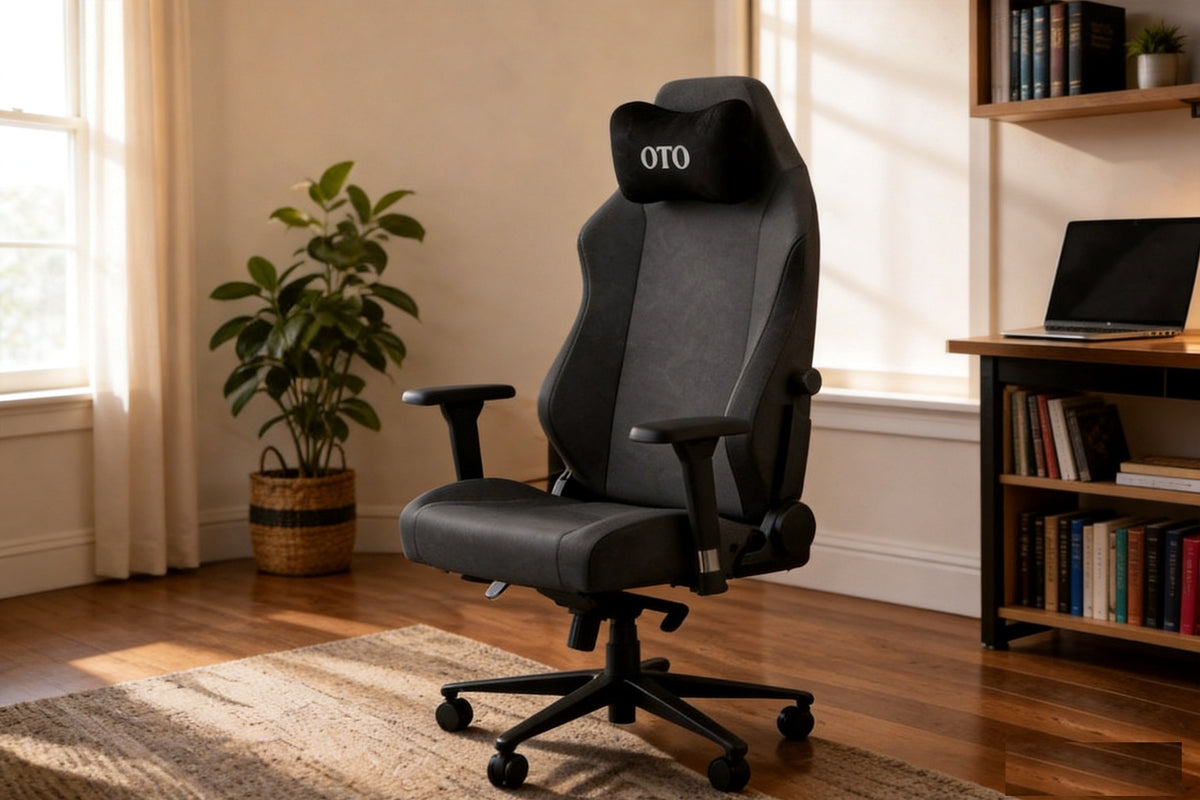
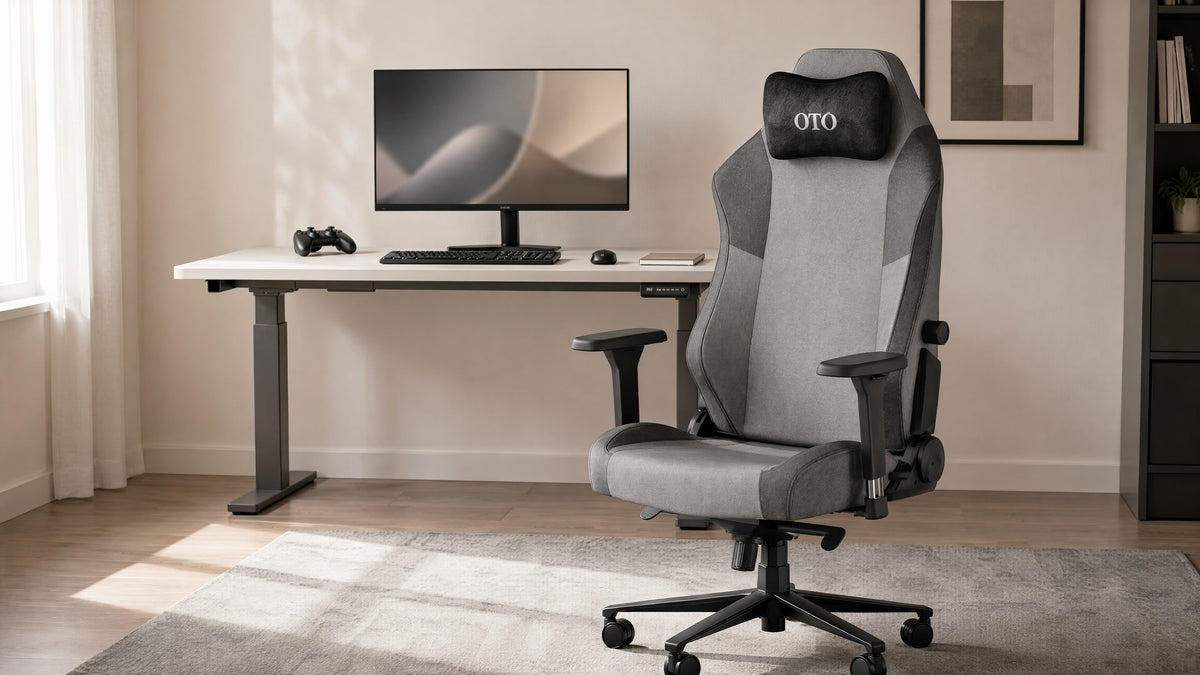
We built the Arena 3 around fabric for the reasons above. Its published specifications list European Davis LETTO fabric, a soft, breathable, densely woven textile with a water-repellent surface, rated at 100,000+ Martindale abrasion cycles with Grade 4 pilling resistance in controlled material testing, and OEKO-TEX STANDARD 100 certification for the fabric itself.
Read each number by its scope. A fabric abrasion rating covers the fabric, not the whole chair. Water-repellent slows absorption so spills can be blotted away; it does not mean waterproof, and spills still need prompt attention. For mechanical performance, OTO lists ANSI/BIFMA X5.1-2017 (R2022) testing for the chair, and Arena 3 carries a 5-year limited warranty.
Coffee on the Arena 3: it beads, runs off, and wipes clean.
Scratch test: a pointed metal tool on the LETTO fabric.
FAQ
Does all PU leather peel?
Given enough time and humidity, standard ester-based PU will degrade. Better resin chemistry and a dry, cool room push the timeline out, but no PU coating lasts forever.
Is fabric hotter than PU in summer?
The opposite. Woven fabric breathes, so heat and moisture move away from your body instead of building up at the contact surface.
Can peeling PU be repaired?
Not meaningfully. Repair kits can recolor small cracks, but once the coating delaminates from the backing, a cover or reupholstery is the practical answer.
What lasts longest overall?
Mesh avoids surface degradation entirely but feels different and offers less cushioning structure. A quality woven fabric with a published abrasion rating is the closest balance of comfort and surface longevity.
The bottom line
Peeling is chemistry, not bad luck. If a PU chair fits your budget today, maintain it and manage humidity. If you are buying for the long run, a fabric chair with published material ratings removes the failure mode entirely.
If peeling is what pushed you to research chairs, Arena 3 is our answer: fabric contact surfaces, published material ratings, and a 5-year limited warranty. It is available now with free U.S. shipping. See the Arena 3, or read our transparent, spec-by-spec Arena 3 review first.
OTO Arena 3 Build Review: Why We Designed It This Way
Can You Use a Gaming Chair as an Office Chair?