


When you shop for an ergonomic office chair, terms like “lumbar support,” “breathable mesh,” and “all-day comfort” appear everywhere. But one technical standard deserves closer attention: ANSI/BIFMA X5.1. This guide explains what BIFMA X5.1 testing actually evaluates, what it does not guarantee, and why it can be a useful quality signal when comparing office chairs.
Most people see “BIFMA” on an office chair spec sheet and scroll past it. A few may recognize that it has something to do with durability or commercial furniture. But very few shoppers know what is actually being tested — or why it matters when choosing a chair for long workdays.
That matters because the ergonomic chair market is crowded with broad claims. Almost every chair says it is comfortable. Many claim to support better posture. Some highlight premium materials, adjustable parts, or long-term durability. But without a recognized testing standard, it can be difficult to separate meaningful engineering from marketing language.
ANSI/BIFMA X5.1 gives buyers a clearer way to evaluate the structural side of an office chair. It does not tell you whether a chair will feel perfect for your body. It does not replace ergonomic fit. But it does help answer an important question: is the chair built to withstand real-world use safely and reliably?
What Is BIFMA?
BIFMA stands for the Business and Institutional Furniture Manufacturers Association. It is a North American organization that develops standards for commercial and institutional furniture, including office seating.
For office chairs, one of the most relevant standards is ANSI/BIFMA X5.1, which focuses on general-purpose office chairs. The standard is designed to evaluate chair performance in a range of usage scenarios, including structural strength, stability, durability, and mechanical safety.
In simple terms, BIFMA standards help define what a chair should be able to withstand before it can reasonably be described as suitable for demanding office use.
Important distinction: “Tested to ANSI/BIFMA X5.1” means the product has been evaluated against the office seating standard. “BIFMA Compliant®” is a separate program and registry. When comparing chairs, look carefully at the exact wording used by the brand and whether supporting documentation is available.
Why Third-Party Testing Matters
Many chair listings include quality claims, but not all claims carry the same weight. A brand can describe a chair as durable, commercial-grade, or built for long-term use. Those statements may be true, but they are much stronger when supported by testing against a recognized standard.
Third-party testing helps create a more objective benchmark. Instead of relying only on internal brand claims, the product is evaluated according to defined test methods and performance requirements. This gives buyers a more reliable way to compare products across different brands and price points.
For a buyer, this distinction matters. A chair that simply says “heavy duty” is making a broad marketing claim. A chair that has been tested to ANSI/BIFMA X5.1 is referencing a specific office seating standard with defined performance expectations.
What ANSI/BIFMA X5.1 Actually Tests
ANSI/BIFMA X5.1 is not a single simple test. It includes multiple procedures designed to evaluate the safety, strength, stability, and durability of general-purpose office chairs. While the exact testing protocol is technical, the main ideas are easy to understand.
1. Structural Durability
A good office chair must do more than feel stable on day one. It needs to withstand repeated sitting, leaning, adjusting, reclining, and movement over time. ANSI/BIFMA X5.1 includes durability-related tests that apply repeated loads to key components such as the seat, backrest, arms, and base.
These tests are designed to simulate the kind of stress a chair experiences during regular use. The goal is to check whether the chair’s structure can remain reliable after repeated loading, rather than only surviving a one-time strength test.
This is especially important for home office users who sit for long work sessions every day. A chair may look solid in photos, but long-term durability depends on the quality of the frame, mechanism, base, gas lift, and connection points.
2. Stability and Tip-Over Resistance
Stability is a major safety factor. A chair should remain stable when a user sits down, shifts weight, leans back, reaches to the side, or uses adjustable features.
ANSI/BIFMA X5.1 includes stability-related evaluations to help determine whether a chair is likely to tip under defined conditions. This is particularly relevant for ergonomic chairs with reclining mechanisms, adjustable seat depth, or footrests, because these features change how weight is distributed across the chair.
A stable chair does not just feel better. It reduces the risk of unexpected movement, imbalance, or tipping during normal use.
3. Drop and Impact Resistance
Chairs experience sudden impact more often than people realize. A user may sit down quickly, drop into the seat after standing, or put extra force on the chair during movement.
Impact-related tests are designed to evaluate how the chair responds to sudden loading. The seat, base connection, mechanism, and gas lift area all need to remain structurally sound. If these parts are poorly designed or made from weak materials, they are more likely to loosen, crack, or fail over time.
This is one of the reasons office chair testing matters: many of the most important components are hidden underneath the seat and are difficult for buyers to judge from product photos alone.
4. Base and Caster Integrity
The five-star base and casters carry the full weight of the user and absorb much of the chair’s movement. They also experience lateral force when a user pushes away from a desk, rotates, rolls, or shifts position.
ANSI/BIFMA X5.1 includes testing related to the base and caster system to help evaluate whether these components can perform reliably under load and movement. This is especially important for chairs used on a daily basis, where small weaknesses can become noticeable after months or years of use.
A chair with a weak base may not fail immediately, but it can develop wobbling, uneven rolling, instability, or noise over time. Stronger base and caster construction contributes directly to long-term confidence.
5. Armrest Load and Adjustment Reliability
Armrests are often treated as a comfort feature, but they are also structural components. Many users lean on them, push against them when standing up, or rest significant body weight on them throughout the day.
Testing helps evaluate whether armrests can handle downward and side forces without breaking, loosening, or slipping unexpectedly. For adjustable armrests, the mechanism also needs to hold its position during normal use.
This matters because armrests are one of the first places where lower-quality chairs may start to feel loose or unstable.
What ANSI/BIFMA X5.1 Does Not Test
ANSI/BIFMA X5.1 is important, but it is not a complete comfort evaluation. It does not mean a chair will automatically feel comfortable for every user. It does not measure whether the lumbar support perfectly matches your spine, whether the seat depth fits your leg length, or whether the headrest suits your preferred sitting posture.
In other words, BIFMA testing is mainly about safety, strength, durability, and stability. Comfort still depends on the chair’s ergonomic design and how well the adjustment features match your body.
This is why buyers should look at both sides of the decision:
- Testing and durability: Has the chair been evaluated against a recognized office seating standard?
- Ergonomic fit: Does the chair offer the adjustments your body needs?
- Daily comfort: Are the materials, lumbar system, seat, recline, and armrests suitable for your work habits?
A well-built chair should perform in all three areas. Testing gives you confidence in the structure. Ergonomic design determines how the chair feels in daily use.
How to Read BIFMA Claims When Buying an Office Chair
Not all BIFMA-related claims mean the same thing. When comparing office chairs, pay attention to the exact wording.
A listing may say “tested to ANSI/BIFMA X5.1,” “meets BIFMA standards,” “BIFMA Compliant®,” or “commercial-grade.” These are not always interchangeable.
A stronger product claim should clearly identify:
- The specific standard, such as ANSI/BIFMA X5.1
- The type of chair being tested, such as a general-purpose office chair
- Whether the brand can provide supporting test documentation
- Whether the product is part of a formal registry or compliance program, if that claim is being made
If a chair only uses vague language like “built to commercial standards” without specifying the standard, testing method, or documentation, the claim is harder to evaluate.
Why ANSI/BIFMA X5.1 Matters for Home Office Buyers
ANSI/BIFMA X5.1 was developed with demanding office environments in mind. In commercial settings, chairs may be used for long hours, by different users, across many years. That is a tougher use case than many home offices.
For home office buyers, that can be an advantage. If a chair is designed and tested around a commercial office seating standard, it may offer stronger long-term reliability than a chair built only for occasional home use.
Durability also affects cost. A cheaper chair that becomes unstable, noisy, or uncomfortable after a short period may not be a better deal in the long run. If you need to replace it frequently, the true cost of ownership rises quickly.
A chair tested to a recognized durability and safety standard gives you a clearer baseline before you evaluate comfort, design, and price.
What This Means for Ergonomic Chair Design
A strong structure is only the foundation. A truly useful ergonomic chair should also help users adjust their sitting position throughout the day.
Look for features that support real posture variation, such as:
- Adjustable lumbar support that follows the lower back
- Seat depth adjustment for different leg lengths
- A recline mechanism that allows supported movement
- Adjustable armrests that help reduce shoulder tension
- Breathable materials for long sitting sessions
- A stable base and reliable gas lift system
These features affect the daily sitting experience. ANSI/BIFMA X5.1 testing helps support the structural side of the chair, while ergonomic adjustability helps determine whether the chair fits your body and work routine.
OTO Zenpex and ANSI/BIFMA X5.1 Testing
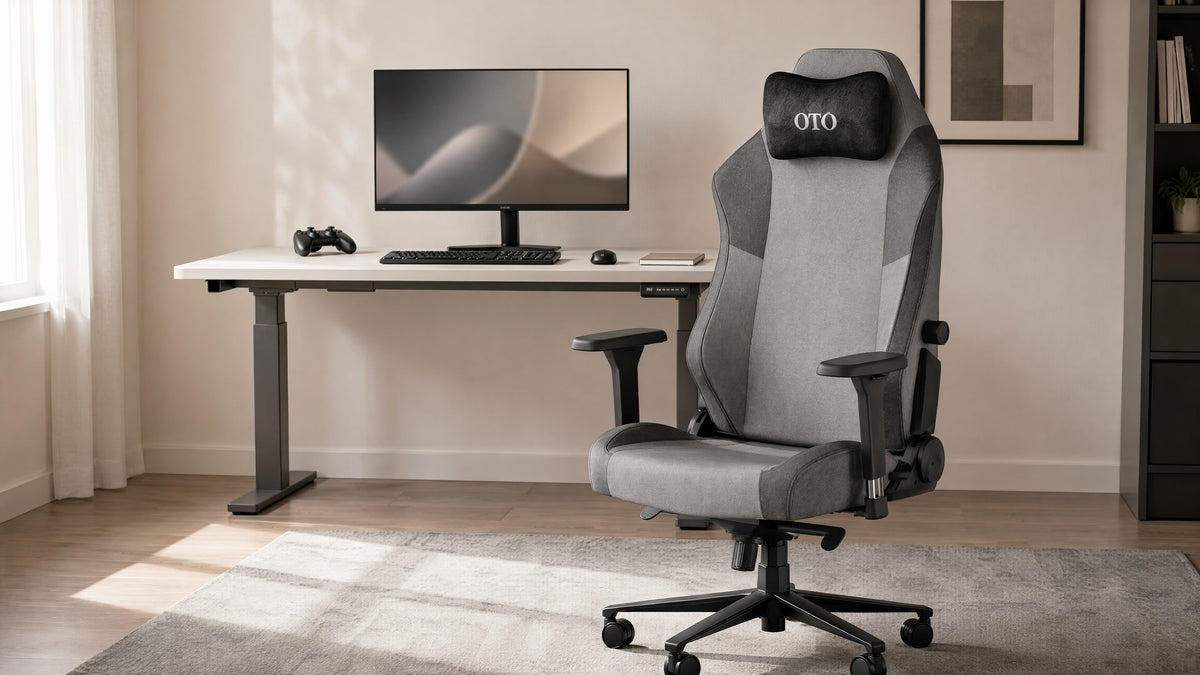
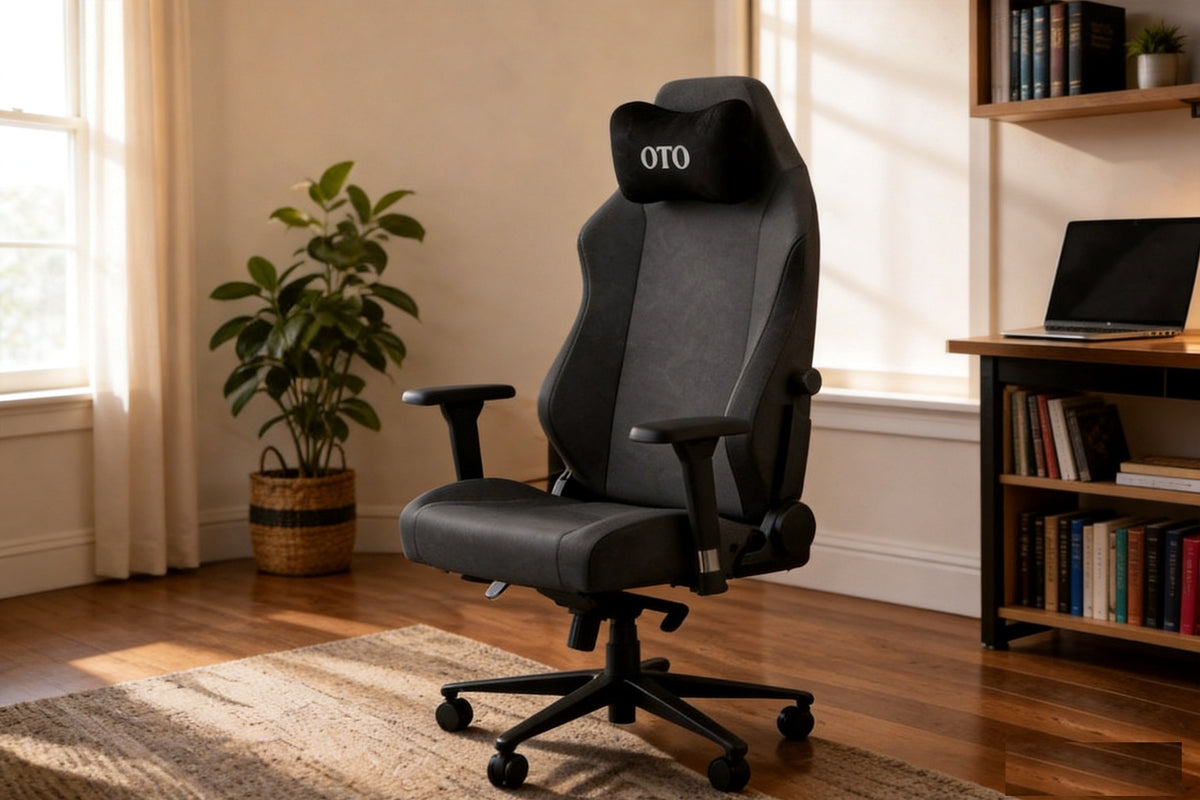
The OTO Zenpex Ergonomic Mesh Office Chair is designed for users who want both ergonomic adjustability and stronger structural confidence. Zenpex is tested to the ANSI/BIFMA X5.1 office seating standard, giving buyers a clearer quality signal beyond ordinary comfort claims.
Zenpex combines this tested structural foundation with features designed for long workdays, including adaptive lumbar support, adjustable seat depth, breathable mesh, reclining support, adjustable armrests, and a hidden footrest for more relaxed sitting positions.
BIFMA X5.1 testing does not make a chair comfortable by itself. But it does help confirm that the structure underneath those ergonomic features has been evaluated against a recognized office seating standard.
For buyers comparing chairs online, that matters. You are not just choosing the chair that looks the most comfortable in photos. You are choosing the chair you will rely on every day — through work calls, focused sessions, long projects, and recovery breaks.

Final Thoughts
ANSI/BIFMA X5.1 is not a flashy feature. It does not appear in a product photo, and it may not be the first thing shoppers notice. But it represents something important: a more objective way to evaluate whether an office chair is structurally safe, stable, and durable enough for serious use.
In a market filled with broad ergonomic claims, understanding what testing actually means can help you make a better purchase decision.
The best office chair is not just the one with the most features. It is the one that combines ergonomic fit, daily comfort, durable construction, and clear testing support. ANSI/BIFMA X5.1 testing helps buyers evaluate one of the most important parts of that equation: whether the chair is built to last.
Frequently Asked Questions
What does ANSI/BIFMA X5.1 mean for an office chair?
ANSI/BIFMA X5.1 is a standard for general-purpose office chairs. It includes tests related to safety, strength, durability, stability, and mechanical performance.
Is BIFMA X5.1 testing the same as a comfort rating?
No. ANSI/BIFMA X5.1 focuses mainly on structural safety and durability. Comfort depends on the chair’s ergonomic design, materials, adjustability, and how well it fits your body.
What does ANSI/BIFMA X5.1 actually test?
It evaluates areas such as chair strength, structural durability, stability, impact resistance, base and caster integrity, and armrest performance under defined test conditions.
Does “tested to ANSI/BIFMA X5.1” mean the same thing as “BIFMA Compliant®”?
Not always. “Tested to ANSI/BIFMA X5.1” means the product has been evaluated against the standard. “BIFMA Compliant®” refers to a separate BIFMA program and registry. Buyers should look carefully at the exact wording and available documentation.
Why does this matter for home office users?
Office chair standards are designed around demanding use cases. For home office users, a chair tested to a recognized office seating standard can provide more confidence in long-term structural reliability.
Is the OTO Zenpex Ergonomic Mesh Office Chair tested to ANSI/BIFMA X5.1?
Yes. The OTO Zenpex Ergonomic Mesh Office Chair is tested to the ANSI/BIFMA X5.1 office seating standard and is designed with ergonomic features for long daily work sessions.
Not Every Ergonomic Chair Fits Everyone: How to Choose the Right Support for Your Body?
Pet-Friendly Gaming Chair: How to Choose a Chair That Resists Scratches, Spills, and Daily Wear